
What Actually Makes a Workplace Perform Well?
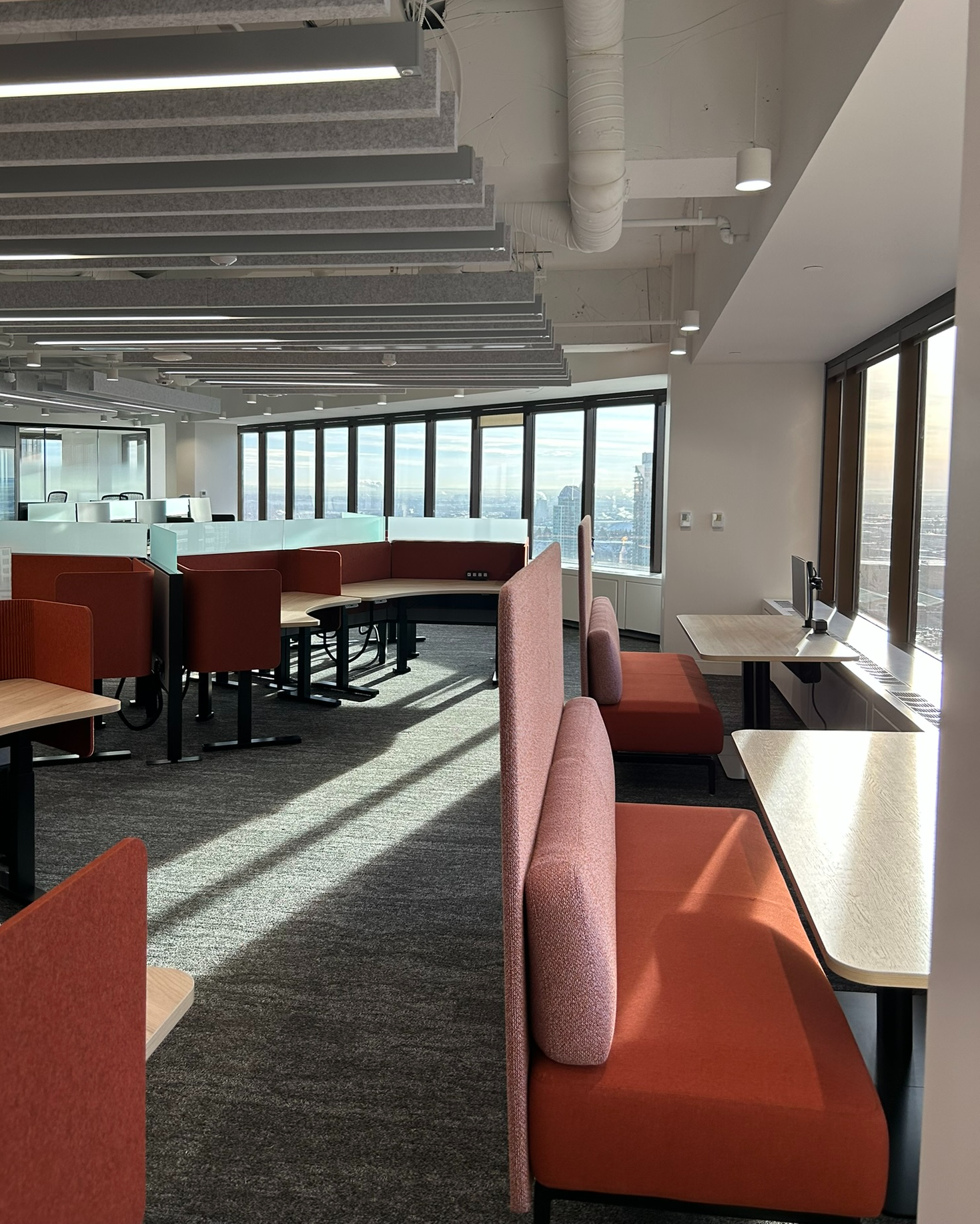
Most workplace projects are evaluated based on their appearance.
High-performing workplaces, however, are measured by how they function.
A well-designed workplace is not a visual asset. It is a business asset—one that influences performance, decision-making, risk exposure, talent retention, and long-term value.
After decades of working on complex commercial interior projects across multiple sectors, one thing is clear:
Successful workplaces are rarely the most decorative. They are the most deliberate.
Below are the real factors that separate high-performing environments from expensive disappointments.
1. Clarity of Purpose Before Design Begins
Workplaces fail when design begins before strategy.
High-performing environments start with disciplined questions:
What business outcomes must this space support?
Where are the friction points in current operations?
What decisions will this space need to support five years from now?
What risks must be reduced, not introduced?
Without this clarity, even beautiful spaces quickly become misaligned with how people actually work.
Strong workplaces are not designed around trends.
They are designed around intent.
2. Spatial Planning That Reflects How Work Actually Happens
Performance is shaped by layout long before finishes are selected.
Effective planning:
Distinguishes clearly between focused work, collaborative work, and client-facing work
Supports natural movement patterns rather than forcing artificial circulation
Reduces unnecessary transitions and inefficiencies
Accommodates both structure and flexibility without compromising either
When spatial logic is sound, teams require less friction, fewer adjustments, and less behavioral adaptation.
The space supports performance instead of requiring people to work around it.
3. Acoustic, Visual, and Cognitive Comfort
One of the most common failures in commercial interiors is ignoring the invisible stressors.
Noise bleed.
Glare.
Poor lighting hierarchy.
Overstimulation.
Lack of privacy.
These issues rarely appear on mood boards—but they profoundly affect:
Focus
Fatigue
Cognitive load
Decision quality
Emotional regulation
High-performing environments account for human bandwidth, not just aesthetics.
They support clarity of thought as much as they support circulation.
4. Flexibility Without Compromising Function
“Flexibility” is often misunderstood as meaning the removal of structure.
In reality, the most adaptable environments are highly intentional.
True flexibility means:
Infrastructure designed for change
Furniture systems that support multiple modes of work
Spaces that can evolve without major disruption
Planning that anticipates organizational growth and contraction
It is not about designing everything to do everything.
It is about designing systems that keep the workplace useful as priorities evolve.
5. Alignment Between Space, Brand, and Experience
High-performing workplaces communicate professionalism before a word is spoken.
They reinforce:
Organizational identity
Client confidence
Internal culture
Credibility
Market positioning
This alignment is subtle but powerful.
Clients feel it. Staff feel it. Leadership feels it.
When space reflects organizational clarity, trust increases—internally and externally.
6. Decision-Making That Prioritizes Long-Term Value
Many projects falter not because of budget constraints, but because of short-term thinking.
Strong workplaces result from decisions that prioritize:
Durability over novelty
Lifecycle value over initial cost
Operational efficiency over visual statements
Strategic clarity over design trends
Every material, layout, system, and detail should earn its place by contributing to performance—not by simply looking compelling in isolation.
Performance Is the Result of Many Small, Disciplined Choices
No single design feature makes a workplace successful.
Performance emerges from the consistency of decision-making across hundreds of details.
It is the difference between:
Designing spaces
andEngineering environments for outcomes
The Measure of Success
The most effective workplaces share common outcomes:
Fewer operational friction points
Stronger alignment between teams and space
Improved client perception
Greater adaptability over time
Reduced need for reactive redesign
Increased confidence in how the organization presents itself
They don’t call attention to themselves.
They quietly support everything the organization is trying to achieve.
Final Thought
A high-performing workplace is not a design trend.
It is the result of clear thinking, disciplined strategy, and deep understanding of how organizations function.
When done well, it becomes one of the most valuable business tools an organization owns.